Choosing food preparation processing equipment for a busy kitchen usually starts with one question: what do you actually prep most? If your answer is vegetables, herbs, onions, and fruit, the commercial vegetable chopper will make sense. If you slice and shred meat all day, a dedicated electric meat slicer might be the smarter buy. This head-to-head compares the commercial vegetable chopper with the electric stainless steel meat slicer, and the roughly $157 price gap between them points to two different work styles.
Quick verdict
Choose the commercial vegetable chopper when you need high-capacity mincing and chopping across vegetables, herbs, fruit, and meat. Choose the electric meat slicer when meat is the main task and you want the more affordable option of the pair.
What to weigh before you choose
Think about how many ingredient types you prepare during a typical service. A kitchen that goes through cases of onions, herbs, and produce will benefit from a larger bucket and higher wattage. A kitchen that buys whole cuts and needs steady slices or shreds will care more about cutter size and feed opening. That distinction matters more than any single number.
Comparison at a glance
| Product | Price | Motor | Capacity / cutting | Best for |
|---|---|---|---|---|
| Stainless Steel Food Processor 6L 1200W Commercial Vegetable Chopper 110V | USD 325.57 | 1200W pure copper motor, 2800 RPM | 6L transparent bucket | Large-batch vegetable and multi-ingredient prep |
| Home Restaurants Electric Stainless Steel Meat Slicer Shredded Cutting Machine | USD 168.18 | 850W pure copper motor | 7mm meat cutter, enlarged feed opening, 330 lbs/h | Dedicated meat slicing and shredding |
Both machines are new, are finished in silver, and use stainless steel in their construction, and both run on a pure copper motor, so the choice really comes down to prep variety, capacity, and price.
Where each product wins
The food processor is the stronger all-rounder. It is built for frequent chopping and mincing, with a transparent bucket that makes batch work easier. Its higher-wattage motor gives it more headroom when you process ingredients such as meat and vegetables.
The meat slicer is the focused specialist. Its cutter and feed design are aimed at meat prep, and it carries the lower price of the two. If a kitchen mostly needs to portion meat for entrees or shred meat for fillings, the slicer does that job without paying for capabilities it will not use.
Product notes
Stainless Steel Food Processor 6L 1200W Commercial Vegetable Chopper 110V
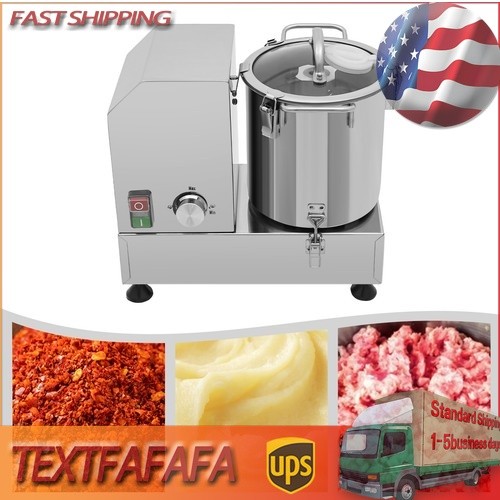
This stainless steel machine is the broader workhorse of the pair. The 6L bucket, clear lid, and ergonomic side handles suit batch vegetable and fruit prep, and the 201 and 304 stainless steel body plus three-year manufacturer warranty make it a durable choice for frequent use. If you want one machine that can mince herbs, chop onions, process vegetables, and handle meat, this is the one. The obvious limitation is the higher price: at USD 325.57, it asks for a bigger upfront investment than the meat slicer. Commercial settings with steady prep demand will get the most from its larger bucket and stronger motor.
Home Restaurants Electric Stainless Steel Meat Slicer Shredded Cutting Machine
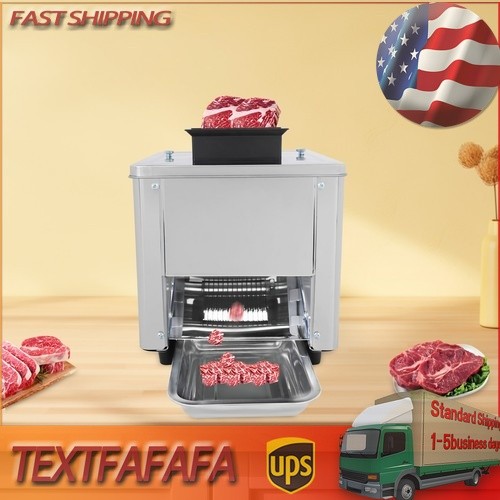
This machine is the lower-cost, meat-specific route. It pairs a stainless steel and nylon build with a dedicated cutter and feed design for steady production. If your menu revolves around meat, the dedicated design keeps prep efficient without the higher price of the all-round processor. The limitation is scope: it is built around meat slicing and shredding rather than broad vegetable chopping, so it will not replace a general food processor in kitchens that prep many ingredient types. For a restaurant with a meat-heavy menu, the lower price makes it an easier first step.
Final choice by use case
Choose the food processor for all-day versatility: mincing herbs, chopping onions, processing vegetables, and handling fruit in big batches. It is the better fit for menus with lots of produce prep. Choose the meat slicer when meat slicing and shredding is the core task and you want to keep the equipment cost lower. It is the better fit for meat-focused kitchens and dedicated prep stations.