If you've ever dealt with a slow drain in a restaurant kitchen, you know grease is usually the culprit. When it comes to warewashing sanitation grease, a grease trap interceptor sits between the sink and the sewer line, letting fats, oils, and food solids settle out before they harden into clogs. The question is how much capacity, flow, and approval your kitchen really needs-and how much you want to spend to get it. This head-to-head compares a compact stainless steel interceptor for restaurant kitchen wastewater with a heavier commercial interceptor built for higher-flow kitchens.
Quick verdict
The stainless steel unit is the pick for a compact setup on a tight budget. It brings useful extras for small kitchens. The commercial steel unit is the pick when you need a larger grease-holding capacity and faster flow. It has the flow rating and approval that matter to commercial food service. If your daily wastewater volume is small, spending much more may not be worth it; if your kitchen is busy, the commercial unit's flow rating and approval make it the safer investment.
At a glance
| Attribute | Stainless Steel Interceptor | 8lb Commercial Steel Interceptor |
|---|---|---|
| Price | USD 49.02 | USD 269.95 |
| Material | Stainless Steel | Steel |
| Capacity | - | 8 lb |
| Flow rate | - | 4 GPM |
| Approval | - | PDI Approved |
| Filtration | Four stages | - |
| Shut-off | Automatic shut-off device | - |
Where the stainless steel unit wins
The stainless steel interceptor wins on upfront cost and flexibility for smaller spaces. It adds useful extras for compact kitchens, and the smaller footprint is a plus when floor space is limited.
Where the commercial steel unit wins
The commercial steel interceptor wins on workload and commercial credentials. It's built for kitchens that send a steady stream of wastewater through the drain and need a recognized approval for food service use.
Product notes
Grease Trap Interceptor Stainless Steel For Restaurant Kitchen Wastewater Oil
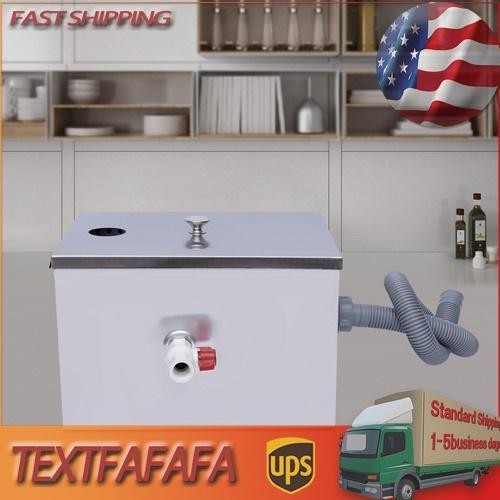
Stainless steel construction makes this interceptor a sturdy pick for light kitchen duty. The automatic shut-off means it can be placed in an open-air situation and will shut down when rain starts. Four stages of filtration target mineral, animal, vegetable, mixed, and emulsified oils, so it covers the oil types you'd expect in a kitchen. The 35×25×23 cm dimensions and 0.86-inch grease outlet make it a better fit for a single-sink setup or a lighter prep area than for a high-volume line. The compact design and lower price point make it an easy way to start separating grease without a big capital outlay, but don't expect it to match a full commercial interceptor's throughput.
8lb Commercial Steel Grease Trap Interceptor - 4 GPM, PDI Approved
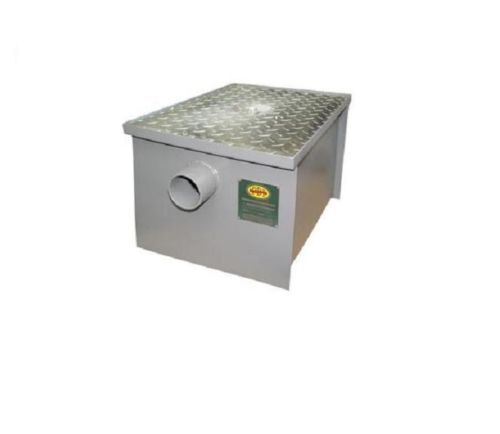
This Express KitchQuip interceptor is the heavyweight of the pair. At $269.95, it is the bigger investment, but the performance specs are different. The 4 GPM flow rate keeps up with busier kitchen drains, and the 8 lb capacity holds more grease and food solids before service. PDI approval is a recognized credential for commercial food service, so if your operation or inspector wants an approved unit, this one fits. The 17-inch length and 11-inch width give you a substantial footprint to plan around. Its durability is aimed at repeated daily use. The main trade-off is price: for a very small kitchen with low output, the stainless model can handle the job for nearly $221 less.
Final choice by use case
Choose the compact stainless steel interceptor if you're working with a tight budget, a smaller space, and a lower volume of wastewater. Its filtration and shut-off give you useful protection without a commercial price tag.
Choose the commercial steel interceptor if your kitchen processes more wastewater and you need faster flow plus an approval credential. The higher price buys capacity, speed, and peace of mind for inspections and maintenance.