When you're outfitting a kitchen for serious food preparation processing, the mixer you choose needs to match the job. Two very different machines often end up side by side in a commercial kitchen: a power-driven spiral dough mixer for bakery work, and a manual tilting meat mixer for sausage and stuffing. Both are sold as new, but they solve different problems. This head-to-head will help you decide which one belongs on your countertop.
Quick Verdict
If bread, pizza, or other dough is your main workload, the Pizza Dough Mixer Commercial Spiral Dough Mixer Machine Food Mixer Bakery 750w is the clear pick with its 750W copper-core motor, 360° mixing angle, and two speeds. If you need to mix large batches of ground meat, vegetables, and spices without electricity, the Commercial Tilting Mixer gives you a manual crank option at $164.79.
Comparison
| Feature | Pizza Dough Mixer 750W | Tilting Meat Mixer 44 lbs |
|---|---|---|
| Price | USD 447.85 | USD 164.79 |
| Price bar | ||
| Power source | Electric 750W | Manual crank |
| Capacity | 10L/2.6 gal | 44 lbs tub |
| Material | Stainless Steel 201 | Stainless Steel 201 |
| Best for | Dough, bakery | Meat, vegetables, spices |
Key Differences
Beyond price and capacity, these mixers work in fundamentally different ways. The spiral dough mixer is a plug-in appliance with a motor-driven mechanism, so it kneads dough automatically. The tilting meat mixer is manual, so you control the speed and effort. That makes the spiral model better for high-volume, repetitive dough work, while the tilting mixer suits tasks where you want to feel the mixture's texture as you blend.
Where Each Wins
The spiral dough mixer wins for automated, consistent dough kneading. Its 750W copper-core motor, two speeds (100/200 r/min), and 360° mixing angle let you set it and let it work. It also comes with a US-standard plug and a freestanding design.
The tilting meat mixer wins for manual, high-volume meat blending. Its large tub and ergonomic hand crank handle big batches without power, and its tilting action makes mixing and emptying easier. It also costs $283.06 less than the spiral model.
Product Notes
Pizza Dough Mixer Commercial Spiral Dough Mixer Machine Food Mixer Bakery 750w
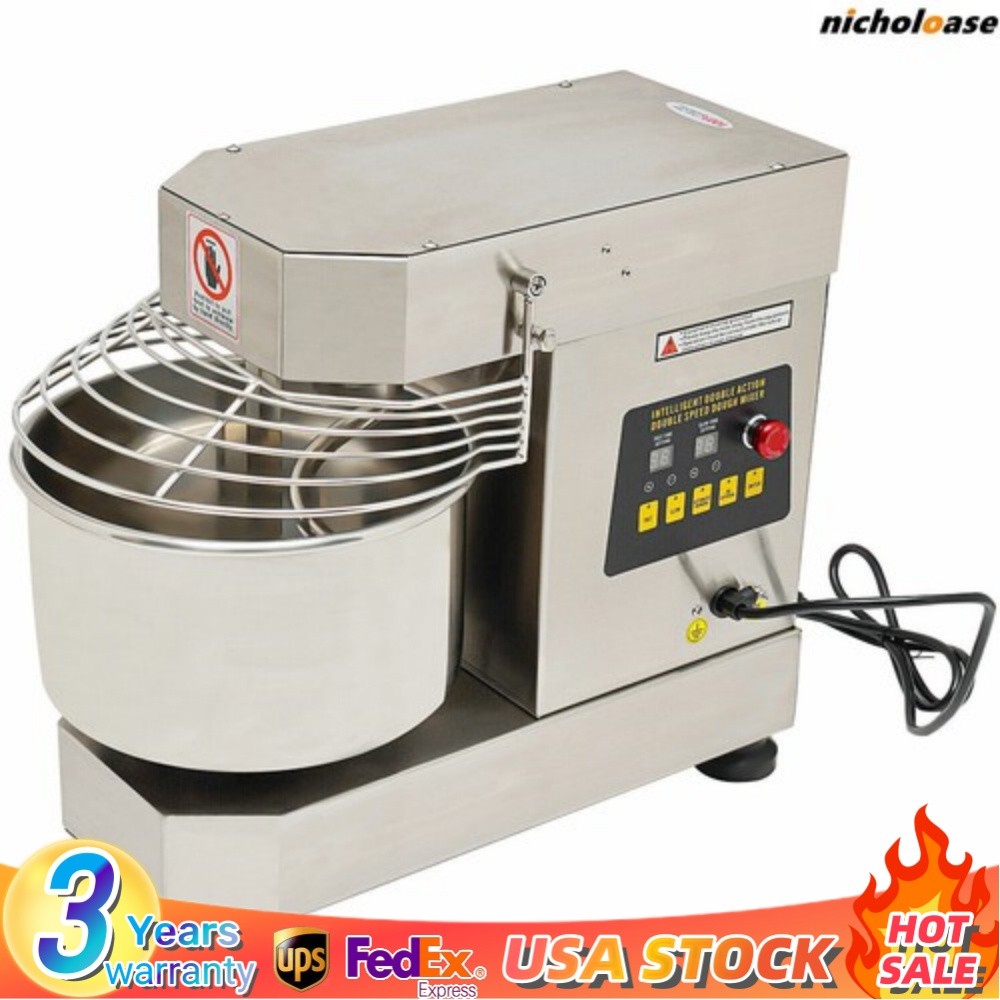
This is the motorized workhorse for anyone who makes dough regularly. The chain drive system and spiral stirring rod handle moderate batches, and the 10L/2.6 gal bowl is sized for typical bakery sessions. Choose it when you want consistent dough without the arm workout. The limitation is the price: at $447.85, it costs $283.06 more than the manual mixer, and its capacity is measured in volume rather than pounds, so it's aimed at dough work rather than the heavy meat blending of the tilting model.
Commercial Tilting Mixer, Manual Meat Mixer, Sausage Mixer Machine 44lbs
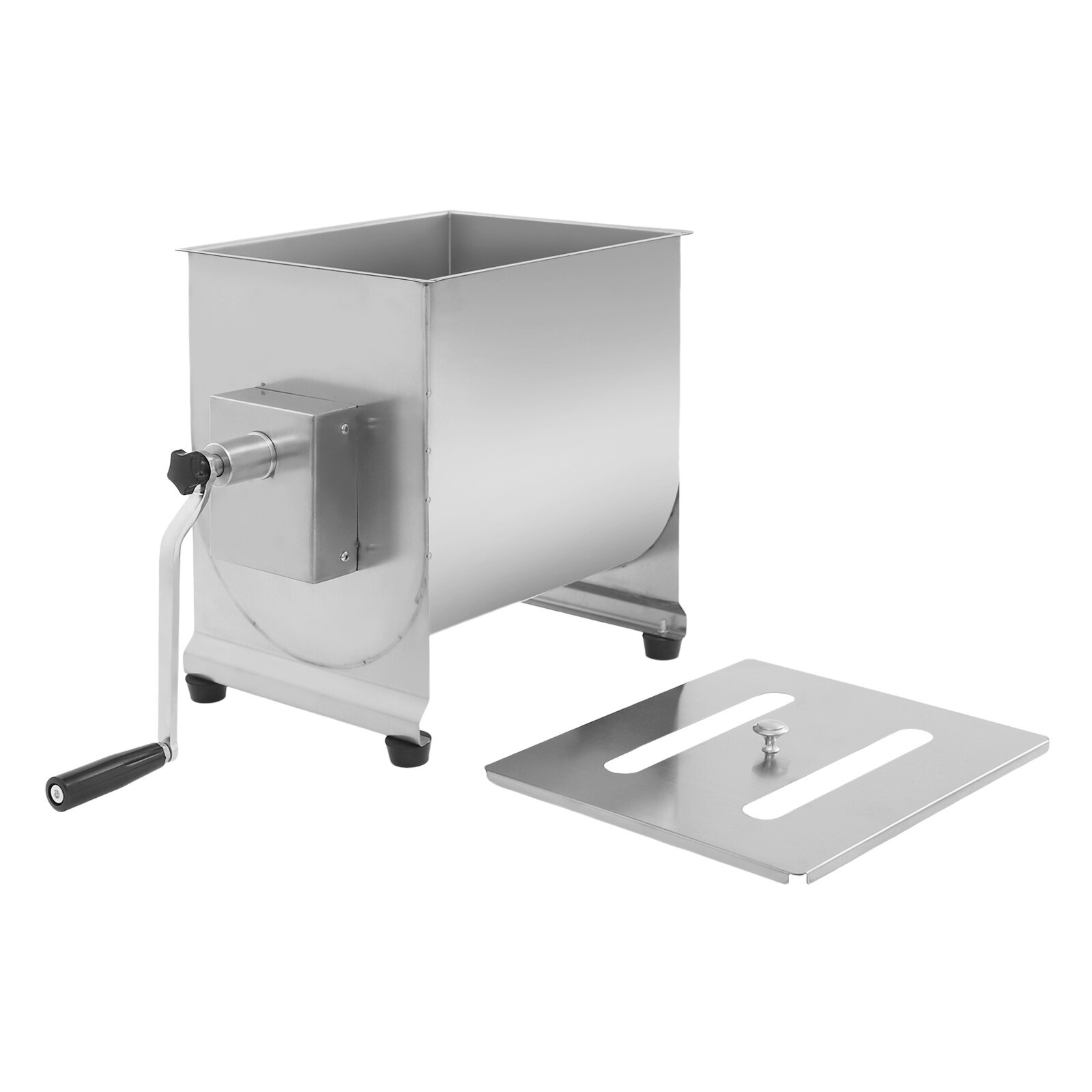
This manual mixer takes the fatigue out of big-batch meat blending. The 44 lbs tub holds a generous amount of ground meat, vegetables, and spices, and the ergonomically designed hand crank lets you mix without electricity. The 201 stainless steel body is rust-proof and corrosion-resistant, so it's built for daily commercial use. It's also the practical budget choice. The trade-off: it's completely manual, so you're the motor. For high-volume dough or anything that needs rigorous kneading, you'll work harder and won't get the automated speed of a spiral mixer.
Final Choice by Use Case
Choose the Pizza Dough Mixer if you bake pizza, bread, or pastries in batches and want consistent, unattended kneading. It brings the motorized convenience of a spiral mixer to your counter. Choose the Commercial Tilting Mixer if your focus is meat processing-sausage, dumpling filling, or seasoned mince-and you want a lower-cost, non-electric solution. For mixed kitchens, weigh your primary job: powered dough work points to the spiral mixer; manual meat blending points to the tilting model.