Choosing commercial cooking equipment for a compact counter is a practical tradeoff: do you choose the Restaurant Countertop Gas Range Hot Plate with its more detailed setup, or the Commercial Gas Range Stove with a lower listed price and cleanup-oriented parts? Both are countertop gas ranges, so the decision turns on the configuration, controls, cleanup components, and price that matter most to your operation.
Quick verdict
The Restaurant Countertop Gas Range Hot Plate is the specification-first choice, while the Commercial Gas Range Stove is the price-and-workflow choice. The Restaurant model emphasizes a stated output figure and hardware details; the Commercial model focuses on grates, independent cooking, and removable cooking parts. If your priority is a defined power and setup profile, start with the Restaurant model. If the listed price and cleanup-focused components carry more weight, start with the Commercial model.
Listed-price and attribute snapshot
| Product | Listed price | Key listed details |
|---|---|---|
| Restaurant 12" 2 Burner Gas Range | USD 379.99 | 2 burners; 56,000 BTU total |
| 12" Commercial Gas Range Stove | USD 305.39 | 2 burners; grates |
Where each product wins
Restaurant Countertop Gas Range Hot Plate
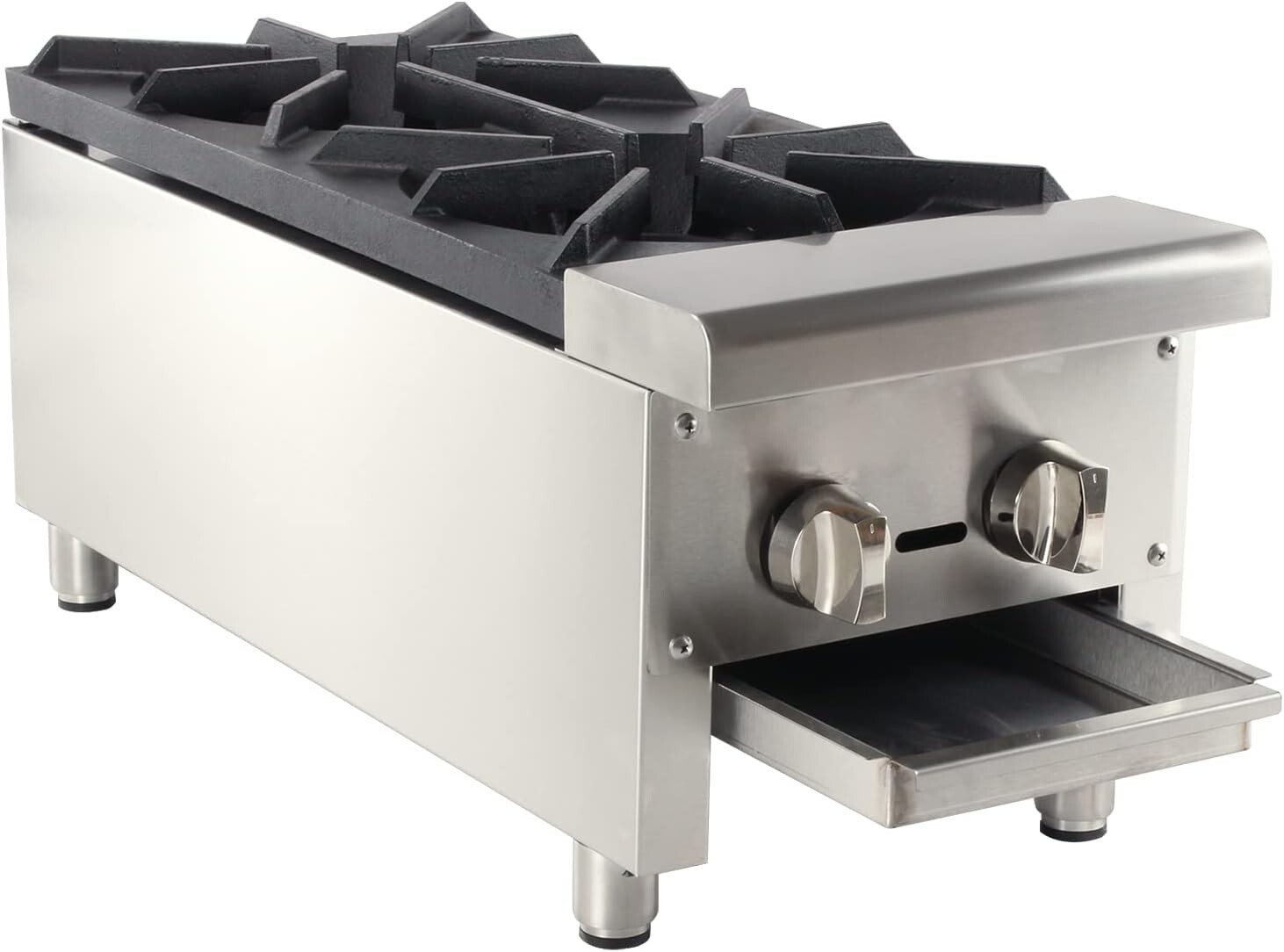
Setup specifics: Separate control buttons, adjustable legs, a drawer-type waste tray, and a 3/4 NPT gas inlet give this range several concrete configuration points. Best fit: Choose it when those controls and hardware details matter to your workflow. The tradeoff is the higher listed price in the pair, so the recommendation depends on valuing this defined setup over the lowest listed price.
12" Commercial Gas Range Stove
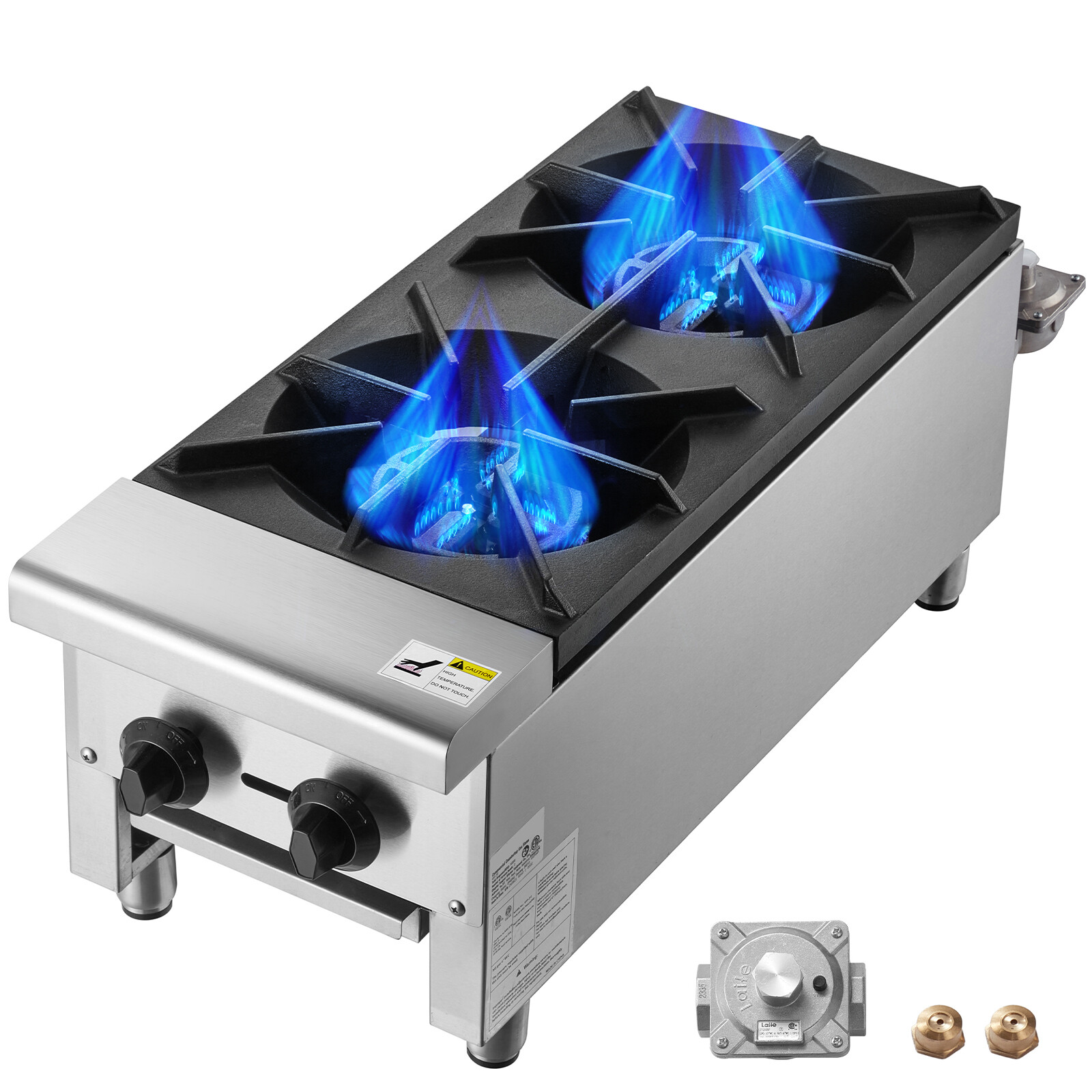
Cooking workflow: Direct flame coverage across the pan, intense heat, fast warming, independent burner use, and ergonomic knob control define this model's cooking setup. Surface: Its stainless steel panel is scratch-resistant and wipes clean easily. Best fit: This is the choice when cooking-control details and a wipe-down surface matter more than additional setup specifications. Its tradeoff is the stated capacity: a 12-inch countertop stove with two burners, which may not fit a cooking plan that calls for a different capacity.
Product notes
Restaurant Countertop Gas Range Hot Plate
The Restaurant Countertop Gas Range Hot Plate is the fit for shoppers who want a gas/liquid propane power type paired with Standard style. Those attributes give the product a defined direction, while its countertop installation keeps the format centered on a work surface. Separate control buttons, adjustable legs, a drawer-type waste tray, and a 3/4 NPT gas inlet add practical setup specificity. Its concrete limitation is the countertop installation type, which may not fit a plan for another installation style. Choose it when those stated configuration details drive the decision and the higher-priced alternative is acceptable.
12" Commercial Gas Range Stove with Grates
No-hole installation for immediate use, plus a removable drip tray and removable burners, makes a practical case for the 12-inch Commercial Gas Range Stove with Grates. These details give shoppers a reason to choose it when a simple countertop workflow and access to removable parts matter. Its limitation is the stated 12-inch, two-burner format, so shoppers whose cooking plan calls for a different capacity should treat that size and count as the key constraint. The lower listed price keeps it in contention for shoppers who want these particular workflow details without choosing the higher-priced alternative.
Final choice by use case
- Choose the Restaurant Countertop Gas Range Hot Plate when the gas/liquid propane power type, the stated 56,000 BTU total, and the defined setup profile are your priorities. Its listed price is USD 379.99.
- Choose the Commercial Gas Range Stove when grates, no-hole installation, and removable cooking parts are more important than the added cost of the other choice. Its listed price is USD 305.39.
- Use price as the tiebreaker: the Commercial model is USD 74.60 below the Restaurant model. That spread supports the lower-priced pick when both configurations fit the job.
The short answer is use-case dependent: the Restaurant model is the specification-led selection, while the Commercial model is the price-and-workflow selection.