When a sink handles greasy cookware, you need a barrier between the drain and the building's piping. That is what a grease trap interceptor does, and for warewashing sanitation grease work there are two very different under-sink routes: a plastic oil-water separator and a heavier steel interceptor built for higher flow. The right pick depends on how much grease, how much hot water, and how much room your kitchen routine sends toward the drain.
Quick Verdict
If you want to separate oil and water in a smaller kitchen, cafe, or school kitchen without spending a lot, the plastic grease trap is a sensible entry point. If you have a restaurant that washes steady batches and you want heavier construction plus a clearer flow rating, the steel interceptor is the stronger buy despite its much higher price.
Compare at a Glance
| Product | Price | Material | Capacity / Size | Flow Rating |
|---|---|---|---|---|
| Plastic Under-Sink Grease Trap | $70.15 | PP plastic | 50L / 13.21 gal | 2.1T / 4629.71 lbs/h |
| Steel Under-Sink Grease Trap | $535.00 | 11-gauge carbon steel | 30 LB size | 15 gallons per minute |
Where Each Product Wins
The plastic unit wins on first cost and on packaged completeness. It ships with a drainage pipe, gloves, and seal, and it is small and light enough for a freestanding or under-counter position. The steel interceptor wins on materials and on a flow rating stated in gallons per minute. Its no-hub connections, removable baffles, T-vent, non-skid deck plate, and PDI-certified status make it the more complete high-volume package for commercial use.
Product Notes
50L Grease Trap Interceptor
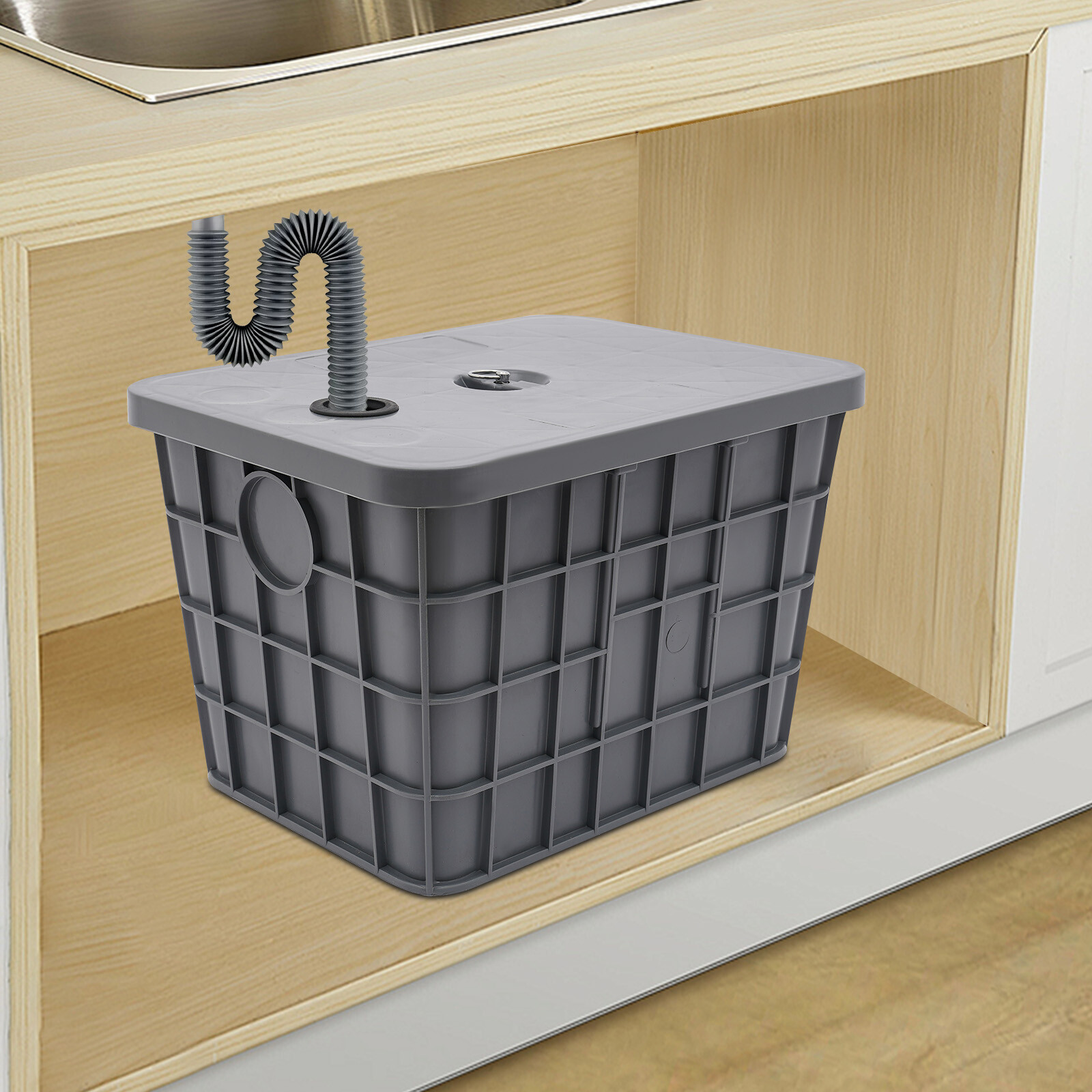
This is the lower-cost way to start keeping grease out of the drain line. Its large tank gives you meaningful holding volume, and the PP plastic construction keeps the unit easy to place under a countertop. The package includes a drainage pipe, a pair of gloves, and a seal, which removes some of the guesswork when you set it up. It suits kitchens, restaurants, fast food chains, bars, cafes, cafeterias, food factories, and schools, so it is positioned as a general-purpose oil-water separator. Choose it when you want a practical, low-cost barrier for a busy but not extreme drain load. The limitation is the plastic shell and the 2.1T/4629.71lbs/h flow figure; a kitchen that sends repeated surges of hot greasy water may need more capacity and a tougher interceptor.
Carbon Steel Grease Trap Interceptor
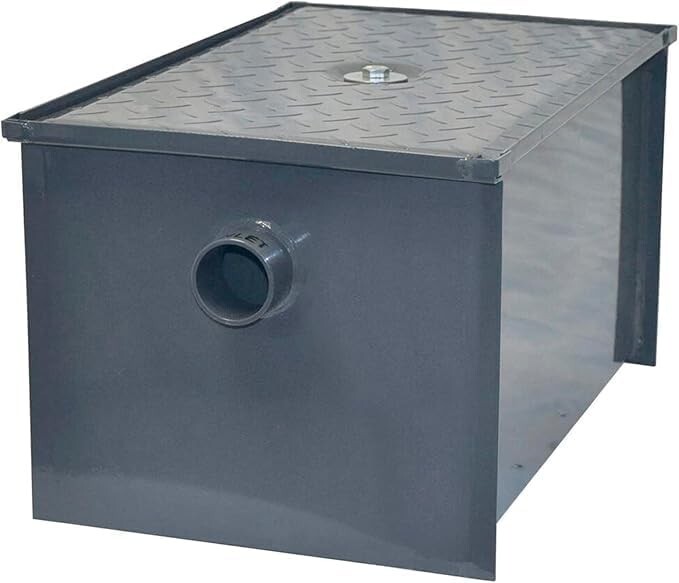
This is the heavier under-sink interceptor for kitchens where grease and water move in volume. It is built from 11-gauge carbon steel with a corrosion-resistant coating, and it includes a T-vent, removable baffles, and a non-skid deck plate. It carries an NSF designation and PDI certification. For the 30 LB size, the flow rate is 15 gallons per minute, which makes it a better match for restaurant sinks that get back-to-back wash cycles. The limitation is the price: at $535 it is roughly $465 more than the plastic unit, so it makes sense only when your kitchen actually needs that flow, a steel shell, and the no-hub setup it provides.
Final Choice by Use Case
Choose the plastic interceptor when your priority is a low-cost trap for a smaller kitchen, bar, cafe, or school and the drain load fits its capacity. Choose the steel interceptor when you need a 15 GPM-rated, heavier unit for a restaurant sink that sees steady use and you can pay the higher price.